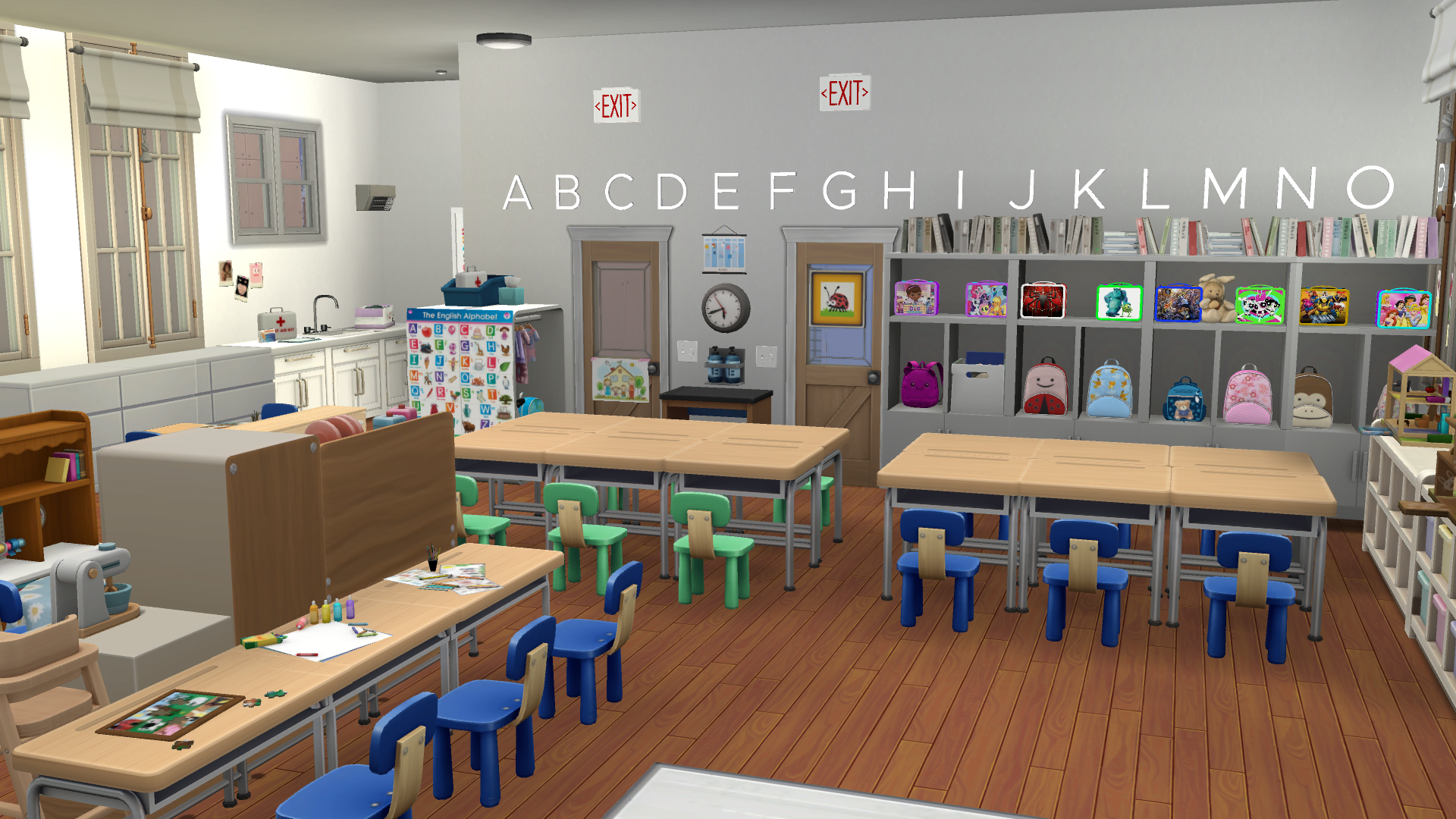
In this photo, I tried to represent the alphabet on the wall. In real life, they are the Fundations alphabet cards the students use.
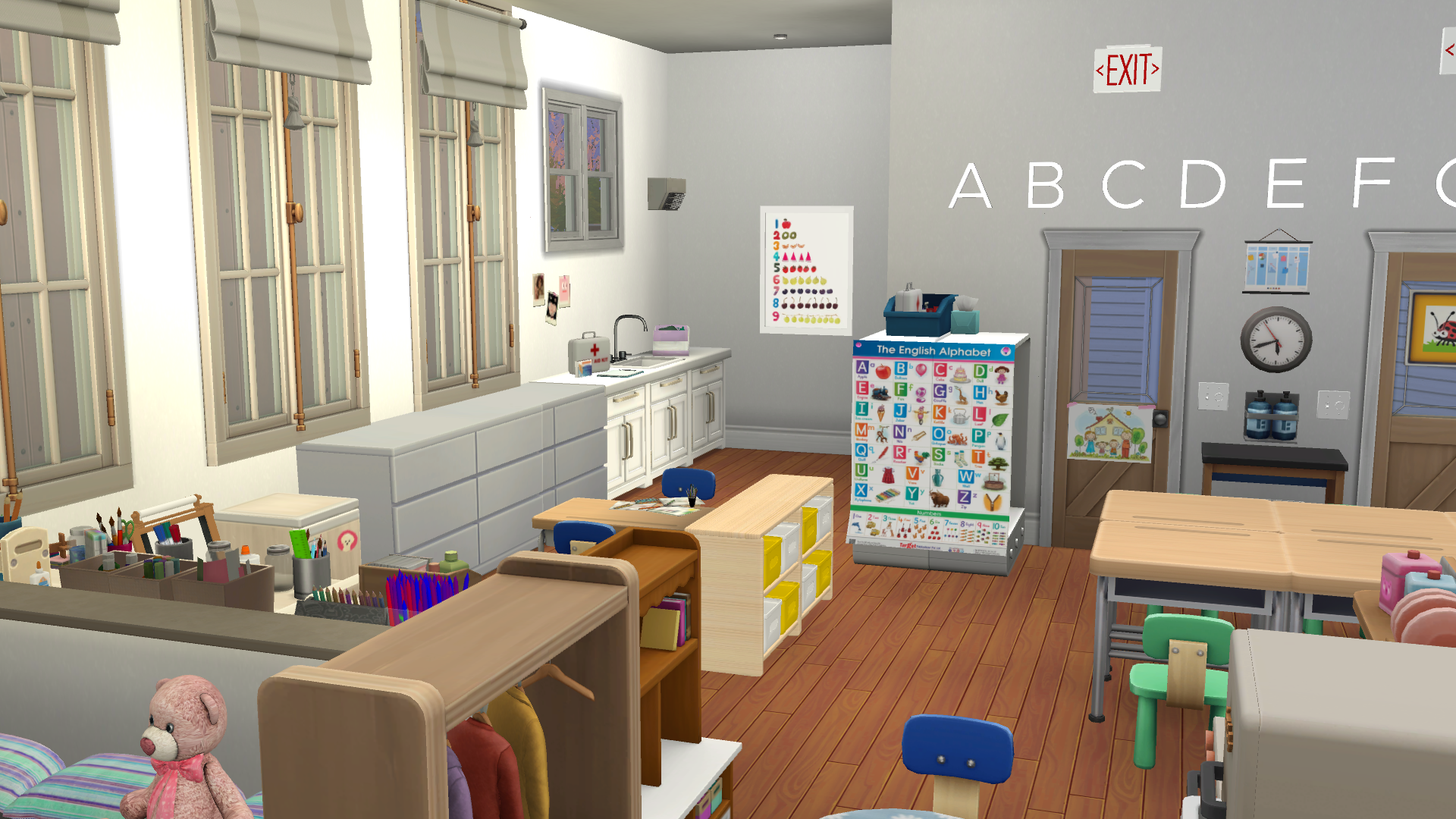
This photo shows the back kitchen area, which has a kettle, sink, and first aid. This area is mostly for teacher use only.
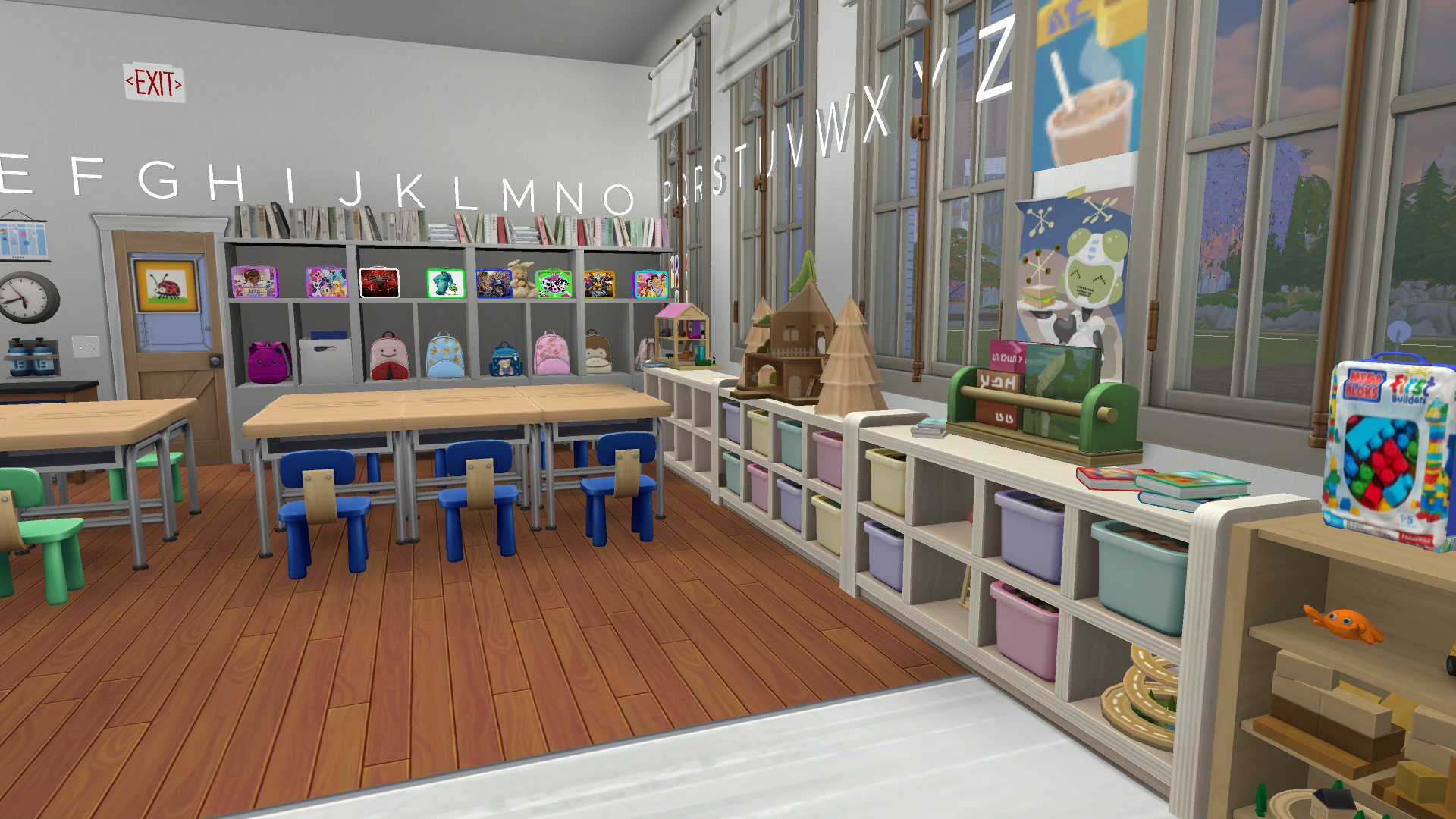
This photo shows the right side of cubbies for backpacks and the shelves mostly with manipulatives and toys (legos, for example).
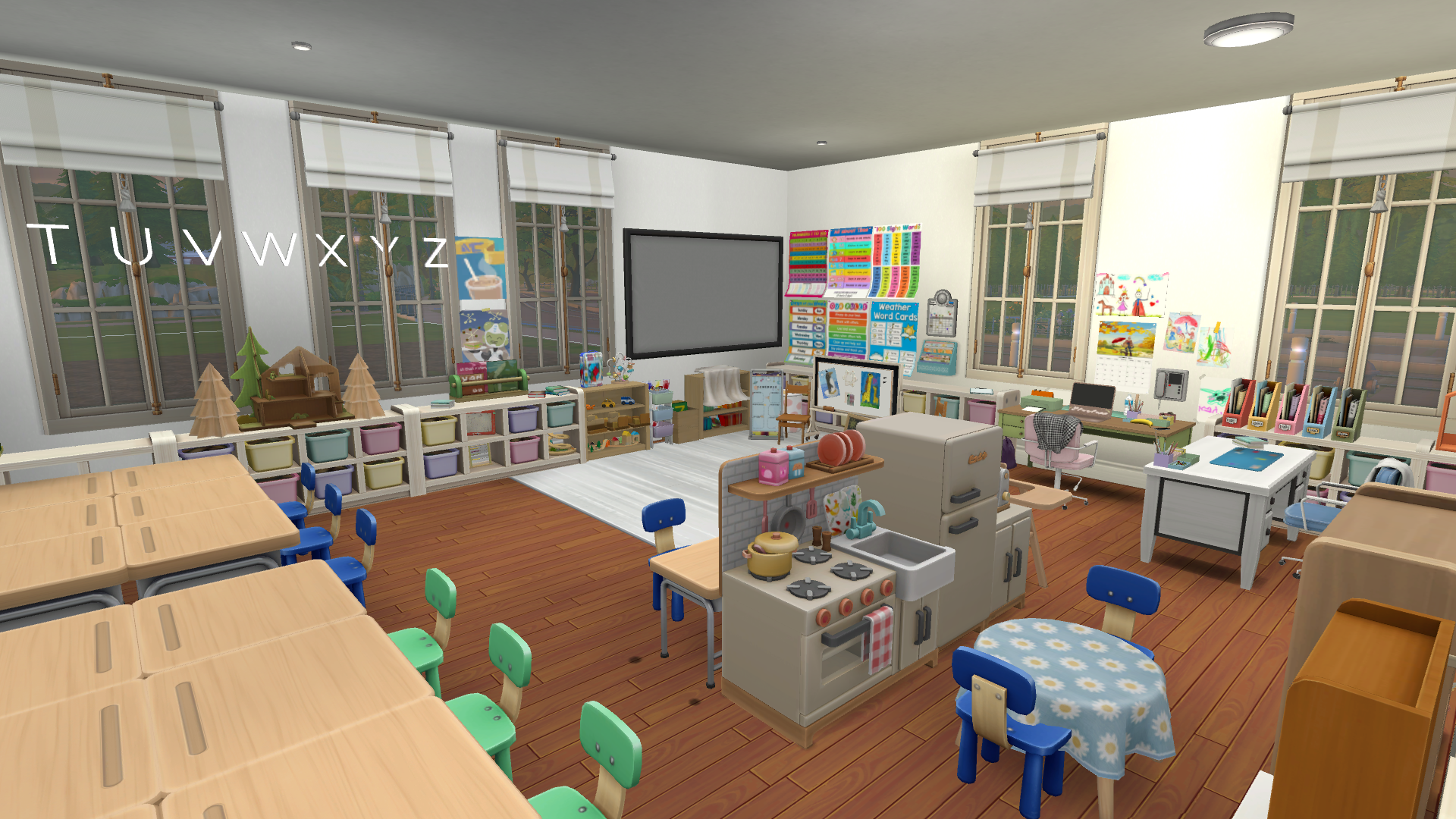
In this photo you can see the desks set up into tables, the kitchen play area, the teacher desks and the carpet + smartboard.
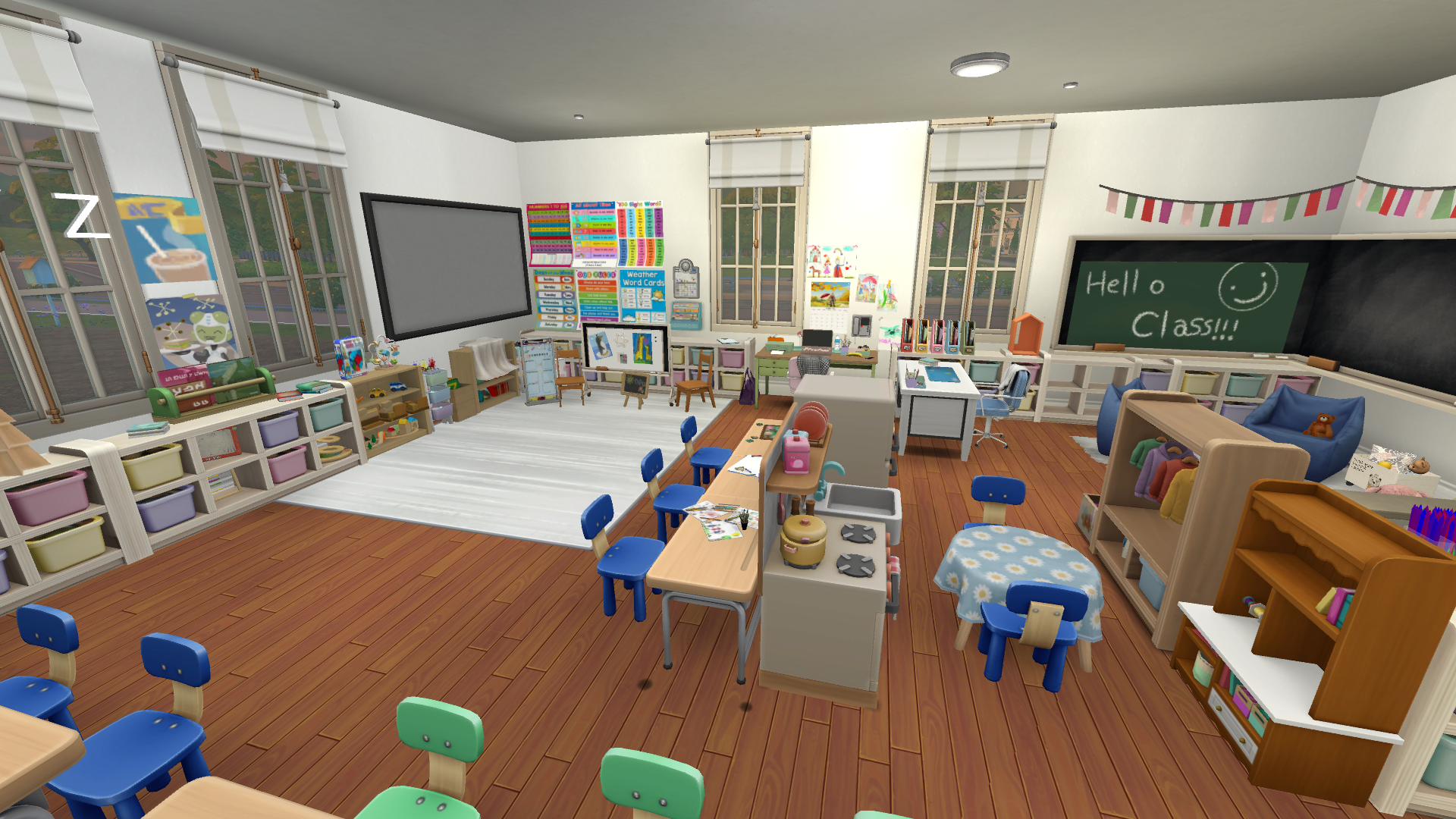
This photo shows pretty well how the room is "split" into different spaces.
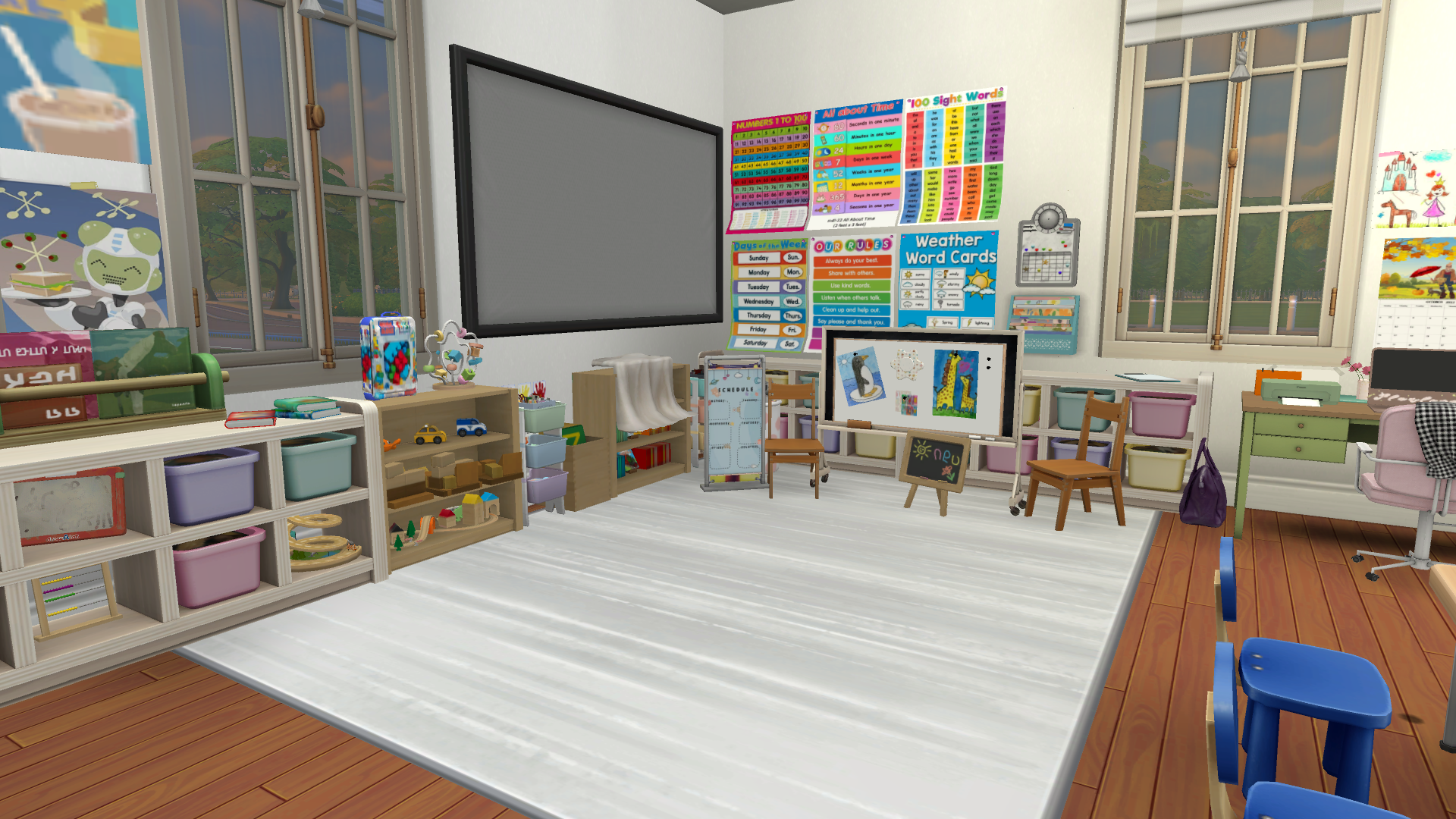
This photo shows the carpet for circle time, which usually has two chairs for morning meeting.
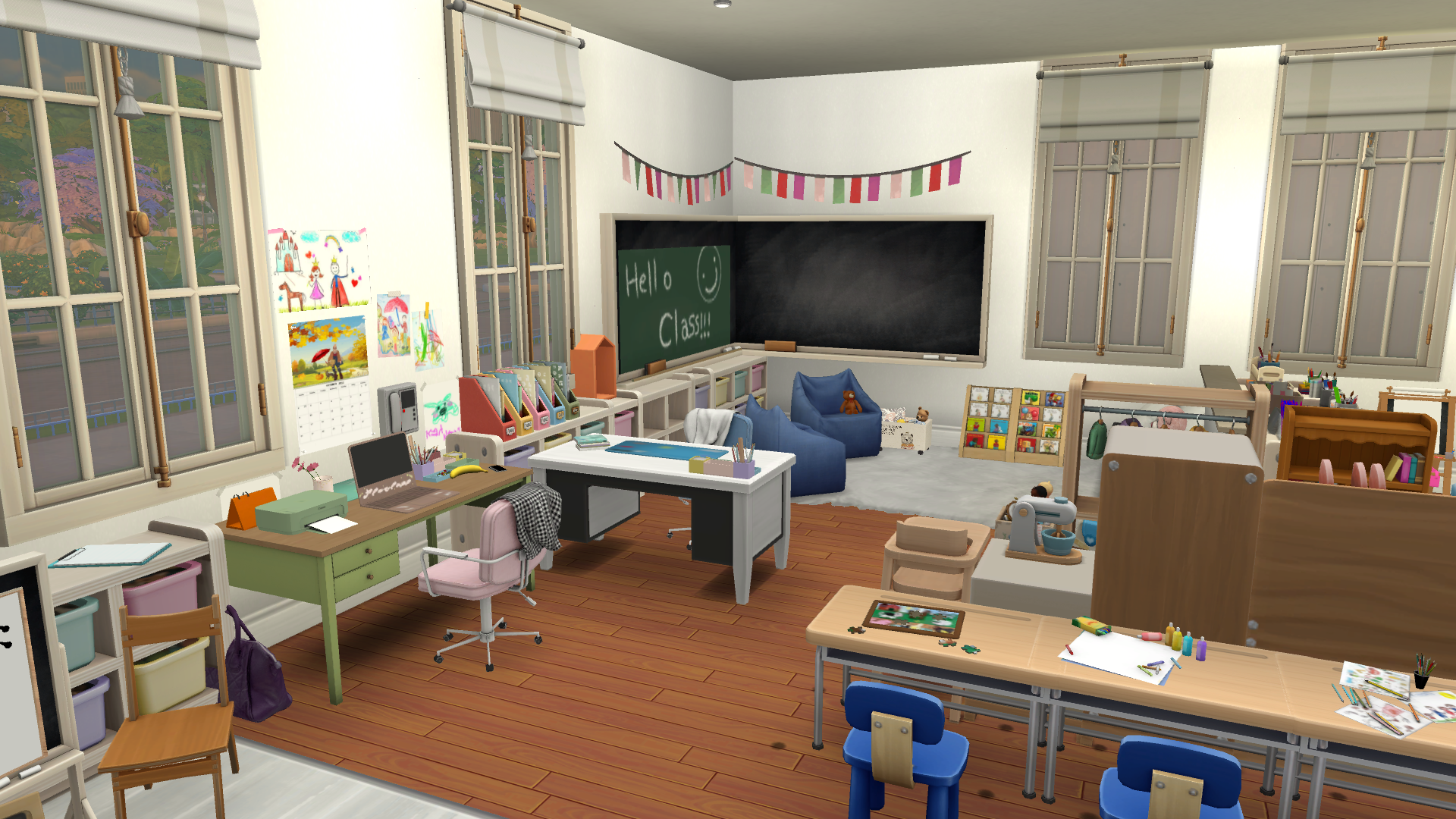
In this photo, you can see the teachers desk. Above her desk, there is a mix of logistical information, like a calendar or schedule, but she also hangs up art given to her by her students.
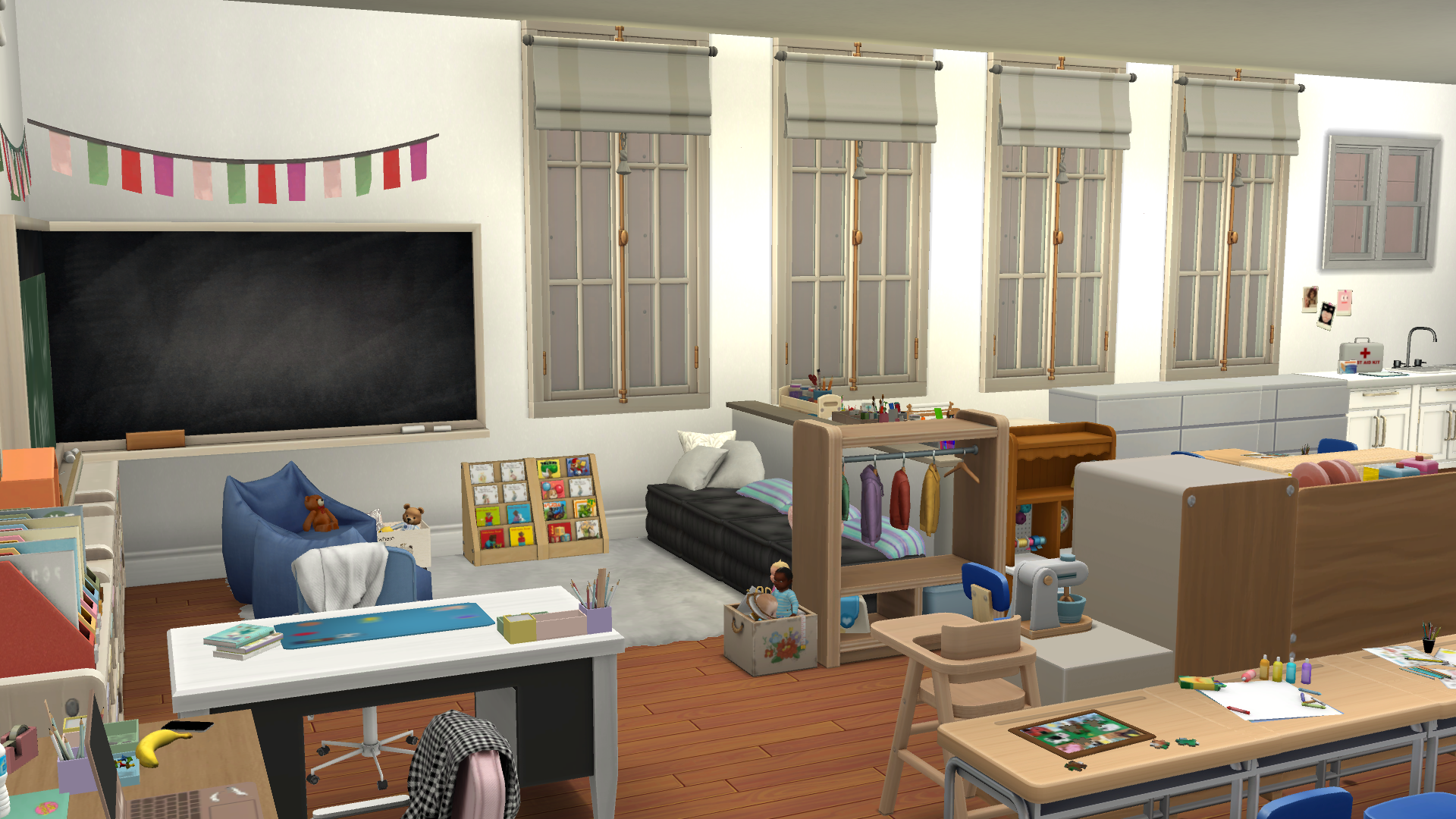
Here you can see the book nook, set with comfy bean bags, pillows, stuffed animals and a book shelf.
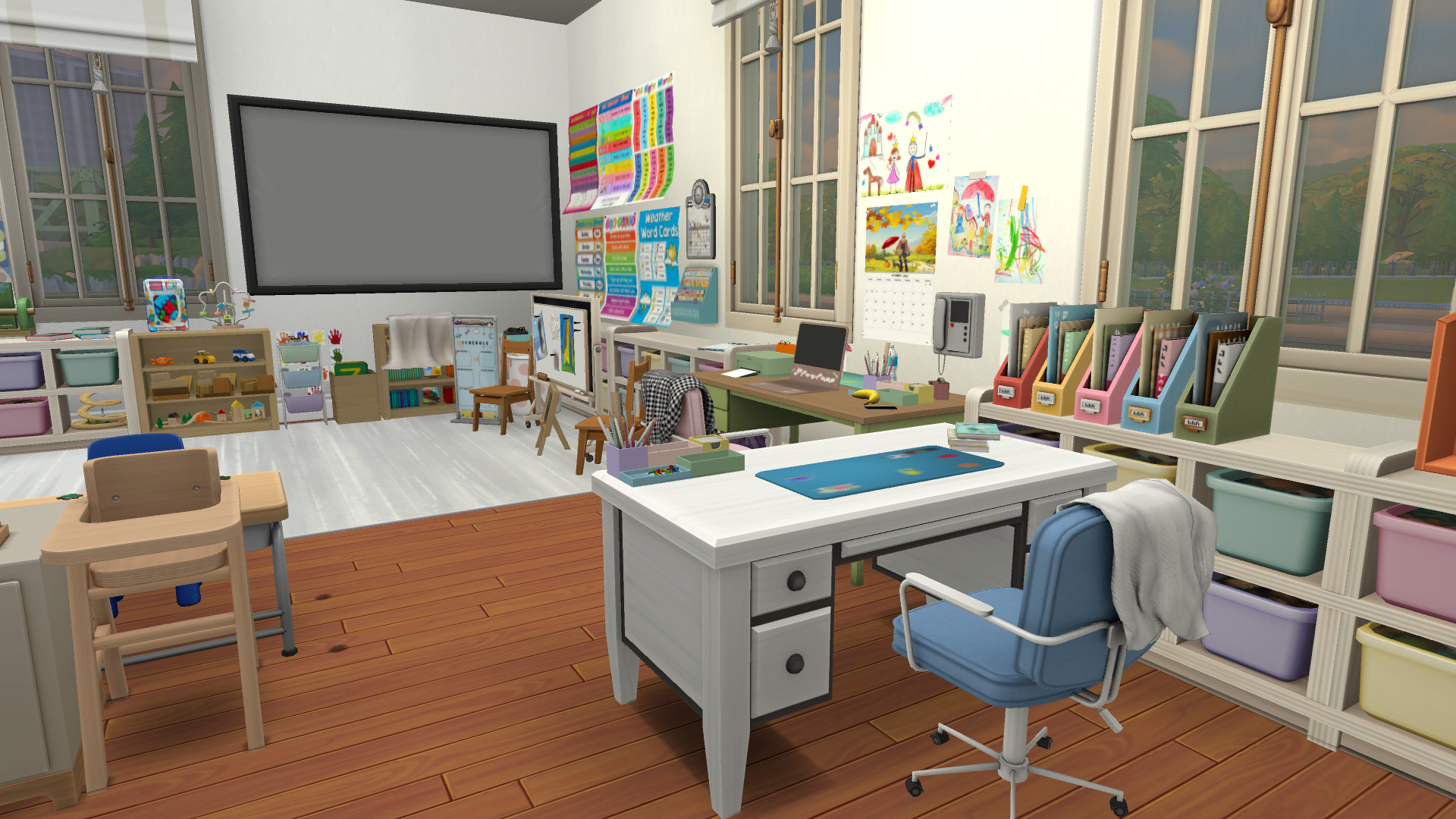
This photo shows the perspective from my desk, facing the teacher's desk, the carpet for circle time and the smartboard.
Classroom Sketch Reflection
Observing the kindergarten classroom before the students arrived, the space immediately communicated intention, care, and an understanding of how young children learn. The room is spacious and thoughtfully organized, with clearly defined areas that support both play and academic exploration. There are thirteen cubbies near the front door, two tables arranged with desks for small group and independent work, a play kitchen and dress up area for choice time/recess, a reading book nook, a carpeted “circle” area for whole group learning, a teacher desk, a real kitchen area for teacher-use, and multiple storage spaces for materials , toys, and supplies. This layout strongly reflects the ideas in The First Six Weeks of School, which emphasizes that classroom environment acts as a “third teacher” and should communicate safety, belonging, and purpose from the very first day. For kindergarteners who are often entering structured schooling for the first time, the room feels inviting rather than overwhelming, signaling that exploration, movement, and curiosity are not only allowed but encouraged.
From a Danielson Framework perspective, the classroom design aligns closely with Domain 2: The Classroom Environment, particularly in how it establishes a culture for learning and manages physical space to support student engagement. Each area serves a clear function while remaining flexible enough for student choice, collaboration, and independence. The abundance of play based and hands on materials acknowledges the developmental needs of five and six year olds, while also setting clear expectations for how learning happens in the room. The classroom feels less like a traditional school space and more like a second home, which is a key Responsive Classroom principle highlighted in The First Six Weeks of School. The environment invites students to see themselves as valued members of the classroom community from the moment they walk in.
I chose to represent the classroom as a three dimensional model rather than a two dimensional drawing because vertical space plays such an important role in early childhood classrooms. Academic supports like Fundations alphabet cards placed above doorways and number sequence posters extending from 0 to 100 are visible without dominating the room, reinforcing learning in subtle, consistent ways. This reflects Domain 1: Planning and Preparation, as the environment is intentionally structured to support literacy and numeracy development before formal instruction even begins. The walls also leave ample room for student work, drawings, and projects, which reinforces ownership and belonging by positioning children as contributors to the space rather than passive occupants.
Overall, the classroom environment embodies the balance between structure and warmth that both the Danielson Framework and The First Six Weeks of School advocate for. Visual supports, clearly defined areas, and accessible materials work together to create a space where students who may not yet read can still make meaning through images, patterns, and repetition. Before a single child has entered the room, the classroom already communicates its values: community, curiosity, and a shared sense of responsibility for learning.