Teacher Lisa’s Morning Meeting: Early Week Observations #1:
Today, I observed a thoughtfully structured morning routine that balances community building with gentle entry into academic learning. Students begin the day by writing or drawing their names on the Smartboard for attendance, then move into Discovery Time with low-stimulation play like blocks, puzzles, and dry erase board drawing. After this soft start, the class gathers for Morning Meeting, where they count how many Friends are present, read classmates’ names from the board in order, review the schedule, and rotate through classroom leadership roles such as reading helper, calendar helper, counting helper, and writing helper. These roles invite students to read the days of the week, add the next calendar date, count the number of days they have been in school, and record the weather using labeled words. The routine is calm but purposeful. It allows students to practice early writing, counting, phonemic awareness, and leadership in ways that feel playful and safe rather than pressured, which I think relates to the the Learning Experiences domain by creating engaging and meaningful oppurtunies for students to participate in learning before formal instruction even begins.
What stood out to me is how closely this aligns with ideas from The First Six Weeks of School. The book emphasizes predictable routines, student responsibility, and a strong sense of classroom community as the foundation for later academic success. Morning Meeting in this classroom clearly serves those purposes. Children know what comes next, they see themselves as contributors, and they practice social and academic skills simultaneously. Leadership roles reflect the book’s guidance on giving children meaningful responsibility, and the tone of the morning feels like what Responsive Classroom describes as “calm, joyful structure.”
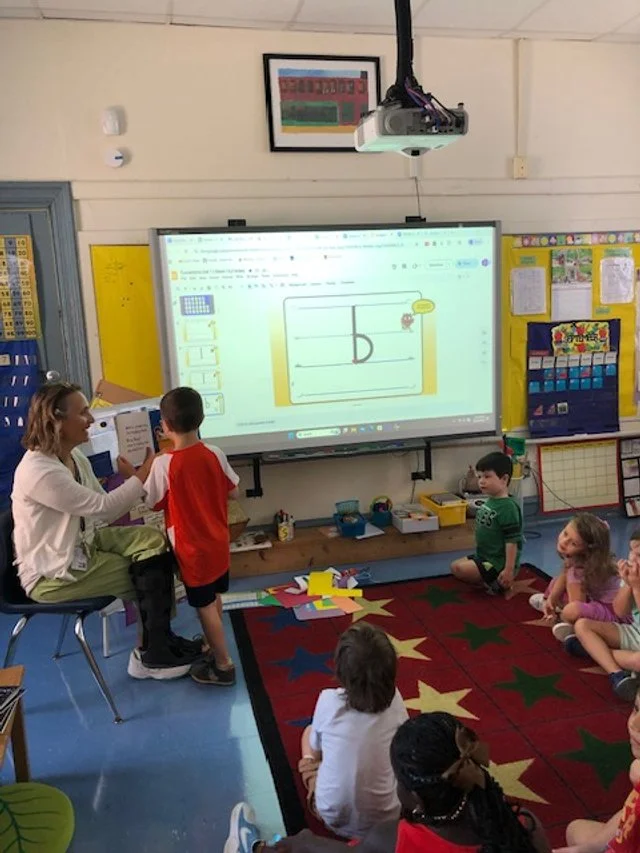
Teacher Lisa’s class also highlights how time is used intentionally, and reminds me of the Planning and Preparation Danielson domain, as it demonstrates thoughtful structure of activities by weaving literacy and math concepts into the community roles. Because her morning schedule is longer, she lingers in the community-building space of Morning Meeting. She also intentionally accelerated some early writing and phonemic awareness work before her absence later in the month, embedding this extra learning within the known routine rather than extra, formal lessons. And academic content appeared in subtle ways. For example, the reading helper accidentally said “Tuesday” instead of “Thursday,” demonstrating that she is already making letter-sound connections (The letter “T” with “Tuesday”) and associations among familiar words (“Tuesday” also being a day of the week). Rather than treating this as a mistake, it became a natural learning moment and phonic practice.
This routine is particularly impactful for students like “Henry”, who sometimes struggle with stamina for more formal blocks like Fundations or math. During highly structured lessons, Henry can feel overwhelmed or resistant, wanting more time for play or movement. In contrast, he thrives in Morning Meeting, where he eagerly volunteers to greet classmates, read the schedule, or help count the days of school. This is a powerful reminder that academic learning does not only happen during “official” instruction. In the flexible space of the morning routine, Henry practices literacy and numeracy while experiencing belonging and competence. That sense of belonging is central both to early childhood education and to Muhammad’s emphasis on love as a necessary condition for learning.
Seeing this has influenced my own developing practice. I hope to incorporate similarly expansive morning routines, with leadership roles and playful literacy and math review woven throughout the day. I am especially interested in adding songs and jingles like Teacher Kristin uses to support sequencing of days and numbers, since music helps anchor memory for young children. Overall, this observation reinforced that structure does not need to feel rigid, and that academics built into joyful community rituals can be just as powerful as direct instruction, if not more so, especially in the early weeks of school.
